
Simpsonville, SC · Garage Door Service
Why Your Simpsonville Garage Door Doesn't Match What's Sold Today
Simpsonville homes mostly date to the 1960s and 70s, before insulation codes changed door standards. Here's what that means for repair, cost, and winter performance.
- Repairs & new doors
- Springs & openers
- Serving 4 nearby communities
What Is Going On
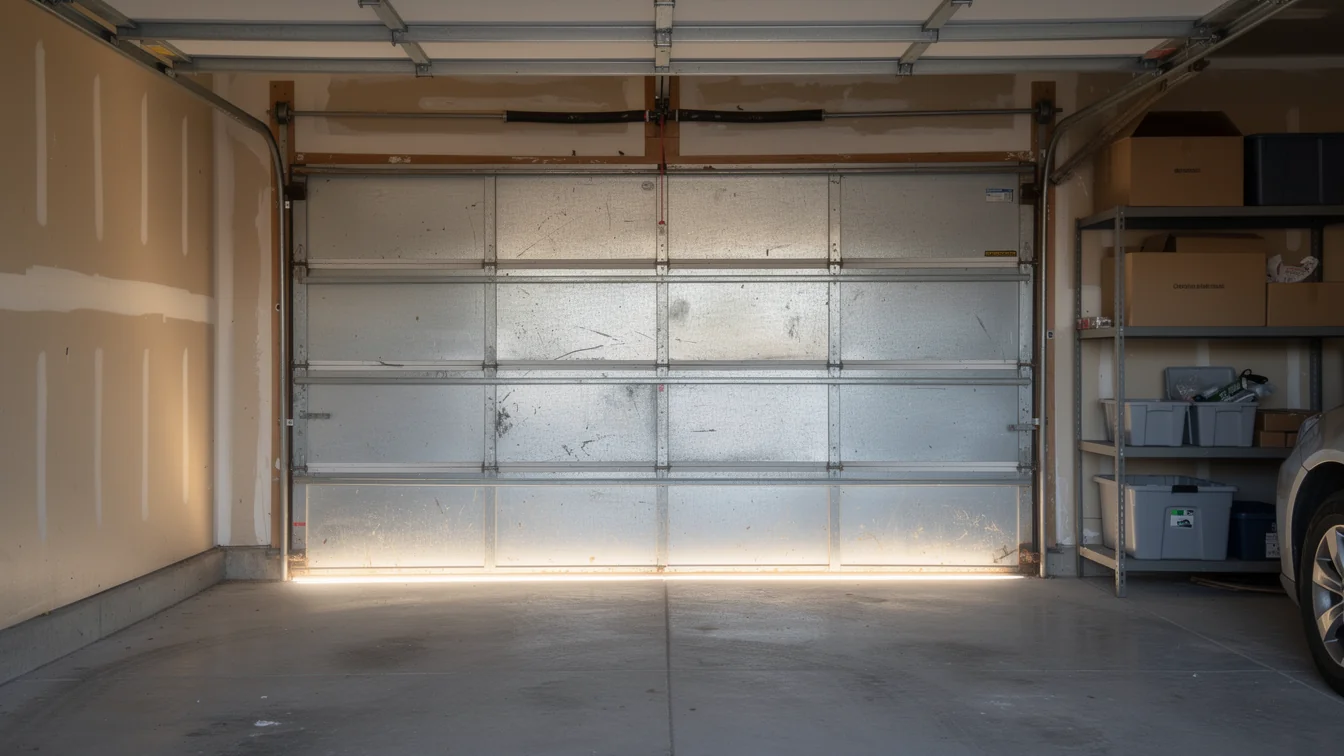
The housing stock around Simpsonville runs from 1938 up through 2013, but the median build year is 1979, and across the 23 named areas that make up this service territory, most of what you see going up was built through the 1960s and 70s. That matters more than people think. A door installed on a house from that era was cut to an opening sized for a single steel panel, often on hardware that predates the two-inch insulated slab doors sold in stores now. The track spacing, the spring size, even the way the opener bracket mounts to the header - none of it assumes the door will ever be swapped for something thicker or better sealed. When a spring breaks or a panel cracks on one of these older openings, the fix isn't always a straight swap. Sometimes the jamb has to be shimmed, sometimes the track has to be re-hung to clear a thicker door. We see this most on original one-piece doors that were never touched after the house was built - the springs are worn out not from age alone but from years of carrying a door that was never balanced quite right to begin with.
When Waiting Is Fine
Not every noise or sag is an emergency. If a door built decades ago is still opening and closing on its own track without binding, and the spring hasn't let go, you can usually wait for a scheduled visit rather than an after-hours call. A door that's slow to close, or that needs a shove partway up, is often just a worn roller or a cable starting to fray - annoying, but not dangerous yet. Where we'd tell you not to wait: a spring that's visibly separated, a door that's come off one track, or an opener that's straining and reversing on its own. Those get worse fast and can hurt someone. For everything else - cosmetic dents on an old panel, a bit of rust on original hardware, an opener that's just getting old and loud - there's no reason to treat it like a crisis. Houses in this area have been running on original or near-original garage hardware for forty, fifty years in some cases, and a few more weeks of a sticky track isn't going to change that.
What You Pay
We don't post a price list here because the honest answer is that it depends on what's actually wrong and what the opening needs - and on a lot of the older stock in this area, the fix isn't a standard part off the shelf. With median household income in the area at $55,378, we try to be straight about what's worth fixing versus what's worth replacing outright, especially on a door and opener combination that's original to a house built before 1980. A spring job on a well-maintained door is one thing; a door that's been fighting bad hardware for decades, where the opener's been compensating for years, is a different conversation. We'll tell you flat out if a repair is throwing money at a door that's going to need replacing in a year anyway. That's not us trying to upsell - it's the same thing we'd want to hear if it were our own garage.
What Local Conditions Do
The climate here is cold-moderate - not brutal winters, but enough cold that an uninsulated door matters. A lot of the doors on 1960s and 70s houses in this area were never insulated to begin with, because insulated steel doors weren't standard when these homes were built. That shows up as a cold garage, sure, but it also shows up mechanically: steel panels with no insulation layer flex more with temperature swings, which stresses the hinges and the seams over the decades. On a door that old, you'll often see hinge wear concentrated at the same two or three points, year after year, because the panel's been flexing the same way since it was installed. It's not dramatic, but it's steady wear that a newer insulated door, with its sandwich construction, doesn't show nearly as much. We don't push insulation upgrades on every job, but on a door of this vintage, it's often the thing most worth discussing.
Frequently asked questions
Why does my garage door feel so much heavier than my neighbor's newer one?
If your house dates to the 1960s or 70s like a lot of homes in this area, your original door is likely a single steel panel with no insulation layer, which weighs differently than a modern sandwich-construction door. The springs were sized for that original weight, so if anything's been swapped since, the balance can be off.
Should I replace my old opener or just the door?
Depends on the opener's condition and whether it can handle a heavier insulated door if you upgrade. On houses built before 1980 in this area, we often find the opener and door are original to each other and were never meant to be separated - swapping one can mean rebalancing the whole system.
Is it worth insulating an old garage door instead of replacing it?
Sometimes, but not always. Adding insulation panels to an old steel door helps with the cold-moderate winters here, but if the door's hardware is already failing, you're better off putting that money toward a new door that comes insulated from the start.
Related garage door services in Simpsonville
More garage door guides
Book garage door service in Simpsonville
Call now or request a quote - tell us what the door is doing and where you are.