
Simpsonville, SC · Garage Door Service
Why Simpsonville Garage Doors Let in Cold Air
Simpsonville homes built mostly in the 1960s and 70s often have worn weather seals, letting cold drafts in through gaps at the garage door bottom and edges.
- Repairs & new doors
- Springs & openers
- Serving 4 nearby communities
What Is Going On
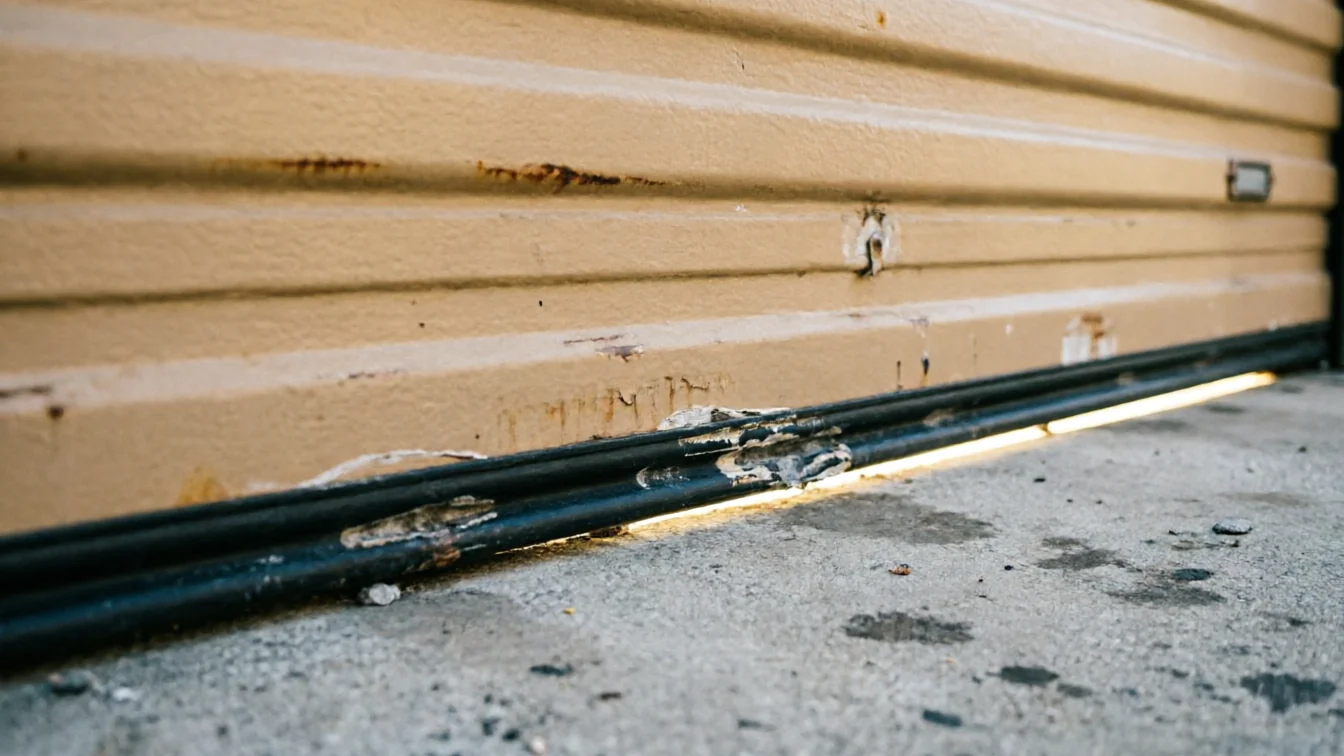
Simpsonville's housing stock runs from 1938 to 2013, with the median build year sitting at 1979. That median matters more than it looks like it should, because a door and frame built in the 60s or 70s used whatever bottom astragal and side weatherstripping was standard then - thin vinyl, often stapled rather than channel-set, and never designed to last fifty years. Across the 23 named areas that make up most of the local stock, that era dominates. When we get a call about cold air coming in around a garage door, it's almost always one of three things: the bottom seal has hardened and cracked so it no longer compresses against the slab, the side stops have pulled away from the jamb enough to leave a visible gap, or the door panels themselves have warped slightly with age and no longer sit flush. None of these are opener problems or spring problems - they're seal and frame problems, and they show up more on houses from that original-build era than on anything built in the last fifteen or twenty years. If your house falls in that older band, drafts at the garage door are less a surprise and more a maintenance item that's overdue.
When Waiting Is Fine
Not every drafty garage door needs a same-week call. If the gap is small and even along the bottom - a quarter inch or less, consistent side to side - that's often just the seal compressing with age, and a replacement bottom astragal is a simple fix that doesn't need to happen today. We'd rather you wait and bundle it with anything else that needs attention than rush a truck out for a seal that's doing most of its job. Where we'd tell you not to wait: if the gap is uneven, wider on one side than the other, that usually means the door itself has racked or a track has shifted, and that's a structural issue, not a weather one - ignoring it risks the door binding or a cable jumping track. Likewise, if you're seeing daylight at the top corners of a door built in that 1960s-70s window, the panel may have warped enough that a new seal won't seal against it anymore, and no amount of weatherstripping fixes a door that's no longer square. That's a call we'd make in person, honestly - some of these are a twenty-minute seal swap, and some aren't worth fixing at all once the door's that old.
What You Pay
We don't have a flat number to give you here, because what a seal or weatherstripping job costs depends on what's actually wrong - a bottom astragal swap is a different job than replacing side stops on a door that's shifted in its frame, and a warped panel on an older door is a different conversation again. What we can tell you is how to think about it: with median household income across the service area at $55,378, most of the jobs we do here are the kind that get fixed, not the kind that get shrugged off and left for next winter. A worn seal costs you in heating bills every month it sits unrepaired, especially once the cold moves in. If you want an actual number, that's a call or a look at the door - we're not going to quote blind over the phone for something we haven't seen, because guessing at a price before we know if it's a seal or a frame problem isn't fair to you.
What Local Conditions Do
Simpsonville sits in a cold-moderate climate band, which doesn't sound dramatic next to places with real winters, but it's exactly the kind of swing that wears a rubber seal out faster than either extreme would. You get a humid Carolina summer that softens and stretches vinyl weatherstripping, followed by stretches of hard cold that make the same material stiff and brittle. That expand-and-contract cycle, repeated every year since the door went in, is what cracks a bottom seal at the folds first - usually right where it bends around the bottom panel's lip. On the 1960s-70s stock that makes up most of the area, that cycle has had forty-plus years to work on original or early-replacement seals. Houses out toward Fountain Inn or Five Forks see the same pattern, since the building era tracks the same decades. None of this means you need to do anything dramatic. It means a seal that looked fine in August can be letting in a steady draft by January, and the fix is almost always smaller than people expect - new weatherstripping, properly seated, not a new door.
Frequently asked questions
Why does my garage door only draft in winter?
Rubber and vinyl seals stiffen in cold weather and lose some of their compression. A seal that looked fine and sealed tight in summer can pull away from the slab or jamb once temperatures drop, especially if it's already a few decades old. It's the same seal, just less flexible - which is why winter is when most people first notice the gap.
Is a drafty garage door worth fixing or should I replace the whole door?
Usually worth fixing. A worn bottom seal or side weatherstripping is a small job. Full replacement only makes sense if the panels themselves have warped or the door has racked out of square - something we'd check in person rather than guess at.
My house was built in the 1960s or 70s - does that matter for this?
Yes. Most of Simpsonville's housing stock, including the 23 named areas across the service area, falls in that build window, and doors and frames from that era used thinner, less durable weatherstripping than what's standard today. Age is usually the bigger factor than any particular defect.
Related garage door services in Simpsonville
More garage door guides
Book garage door service in Simpsonville
Call now or request a quote - tell us what the door is doing and where you are.