
Simpsonville, SC · Garage Door Service
Garage Door Spring Repair Across Simpsonville
Broken torsion spring on a house built between 1960 and 1979? We fix spring failures across Simpsonville's older housing stock, in any weather this area throws at us.
- Repairs & new doors
- Springs & openers
- Serving 4 nearby communities
The Symptom
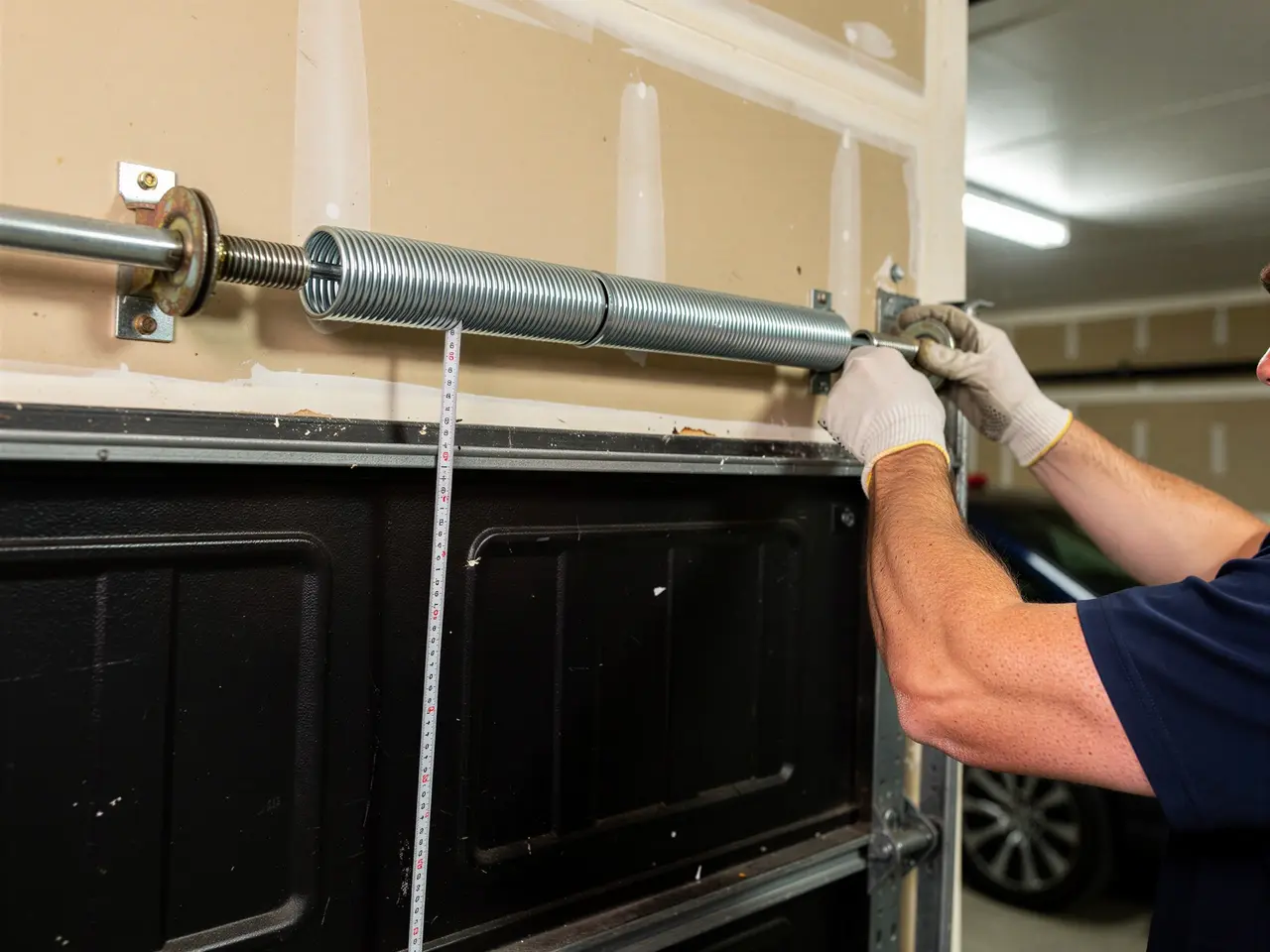
The door won't budge, or it starts up and slams back down. You pull the release cord and the panel feels like it weighs four hundred pounds, because now you're lifting it yourself. Sometimes there's a bang from the garage before any of this happens - that's the spring letting go, usually a torsion spring mounted above the door on a shaft over the header.
A few give warning signs first: a visible gap in the coil, a door that's gotten noticeably harder to open over a few weeks, or a cable that's gone slack on one side. Most don't warn you at all. Torsion springs are rated for a cycle count, and once a home crosses roughly seven to ten years of normal use, that spring is due whether or not anyone's been watching it.
Across the service area, a lot of these doors are original equipment sitting on houses built decades ago - the housing stock here runs from 1938 up through 2013, with the median landing around 1979, and most of the 23 named areas we cover are dominated by 1960s and 70s construction. That means a large share of the springs in these garages are either original hardware nobody's ever touched, or a replacement from a previous repair that's now also aging out.
The DIY Question
You can find torsion spring kits online, and plenty of people have swapped one out without a trip to the ER. But a wound torsion spring stores real energy, and the tool that winds it safely - a proper winding bar, not a screwdriver - isn't something most garages have lying around. If the spring is the wrong size for your door's weight and length, you end up with a door that's either too heavy to lift by hand or one that slams because the spring is overpowering the track.
The honest answer: if you've done this before and have the right bars, go ahead. If this is your first torsion spring, the risk isn't worth the money saved. Extension springs (mounted along the horizontal tracks instead of overhead) are a little more forgiving to handle, but they still carry enough tension to do damage if the cable slips.
We won't talk you out of trying if you're equipped for it. What we won't do is sell you a universal kit and wish you luck - that's not a service we offer, and it's the part of this job where a wrong guess on spring size costs you a second repair.
Why This Fails Locally
Two things drive spring failure rate here more than anything else: age of the house and the swing between summer heat and winter cold that this region's moderate-cold climate band produces. Steel fatigues faster with repeated temperature swings, and a house built in the 1960s or 70s has had fifty-plus years of that cycle working on whatever spring is currently installed, original or not.
With median household income in the service area at $55,378, a lot of homeowners are holding onto original doors and opener hardware longer than a newer, wealthier market might, which means the springs in service here skew older on average than the national base rate would suggest. That's not a knock on anyone - it's just what the housing numbers show: a median build year of 1979 means half the garages we go into have a door system older than the people living in the house realized.
Cold mornings make this worse short-term. Steel contracts slightly in cold weather and loses a bit of flex, so a spring that was already near the end of its cycle life is more likely to snap on a 30-degree morning than a 75-degree afternoon. We see a real uptick in calls right when the first hard cold snap of the season hits.
What Can Go Wrong
A snapped spring is rarely the only casualty. When a torsion spring breaks under load, the sudden release can bend the shaft it's wound on, kink a cable, or strip a cable drum if the door was partway up when it happened. If the opener kept trying to lift the door against a broken spring, you can also burn out the opener's motor or strip its gear - now you're replacing two things instead of one.
On older installs, especially doors that match the 1960s-70s stock common across this area, we also find worn end bearing plates and undersized spring wire that was correct for the original lightweight panel but not for a replacement insulated door installed later. Mismatched hardware like that is a quiet cause of repeat spring failure - the door looks fine, but it's working against gear that was never specified for it.
One limitation worth saying plainly: we don't stock every spring size on the truck for every opener-door combination out there. If your setup is unusual, there can be a short wait on the exact part, and we'll tell you that up front rather than installing something close enough and hoping.
Frequently asked questions
How do I know if it's the spring and not the opener?
If the opener motor runs but the door barely moves, or you hear a loud bang before the door stopped working, that points to a spring. If the opener doesn't make any sound or the lights don't come on, that's more likely electrical or the opener itself, not the spring.
Why did my spring break in cold weather specifically?
Steel loses some flexibility as temperatures drop, and a spring nearing the end of its cycle life is more likely to fail under that added stress. In this climate band, the first hard cold snap of the season is a common trigger for springs that were already close to worn out.
Is it worth repairing an old door or should I replace it?
If the door panel itself is in good shape and it's just the spring, repair makes sense. If you've got a door from the 1970s or 80s with worn track, rusted hardware, and a failing spring all at once, replacing the whole system is often cheaper than repeated repairs.
Can I just replace one spring if I have two?
You can, but most shops recommend replacing both at once on a two-spring system, since the second spring is usually close behind the first in cycle count and will often fail within months if left alone.
By Neighborhood
Spring Repair across the Simpsonville area
We also handle spring repair in these Simpsonville-area suburbs.
Book garage door service in Simpsonville
Call now or request a quote - tell us what the door is doing and where you are.