
Simpsonville, SC · Garage Door Service
Older Garage Door? Here's When Fixing Still Makes Sense in Simpsonville
Simpsonville homes span 1938 to 2013 construction, with most built in the 1960s and 70s. Here's how to tell if your aging garage door is worth repairing or replacing.
- Repairs & new doors
- Springs & openers
- Serving 4 nearby communities
What Is Going On
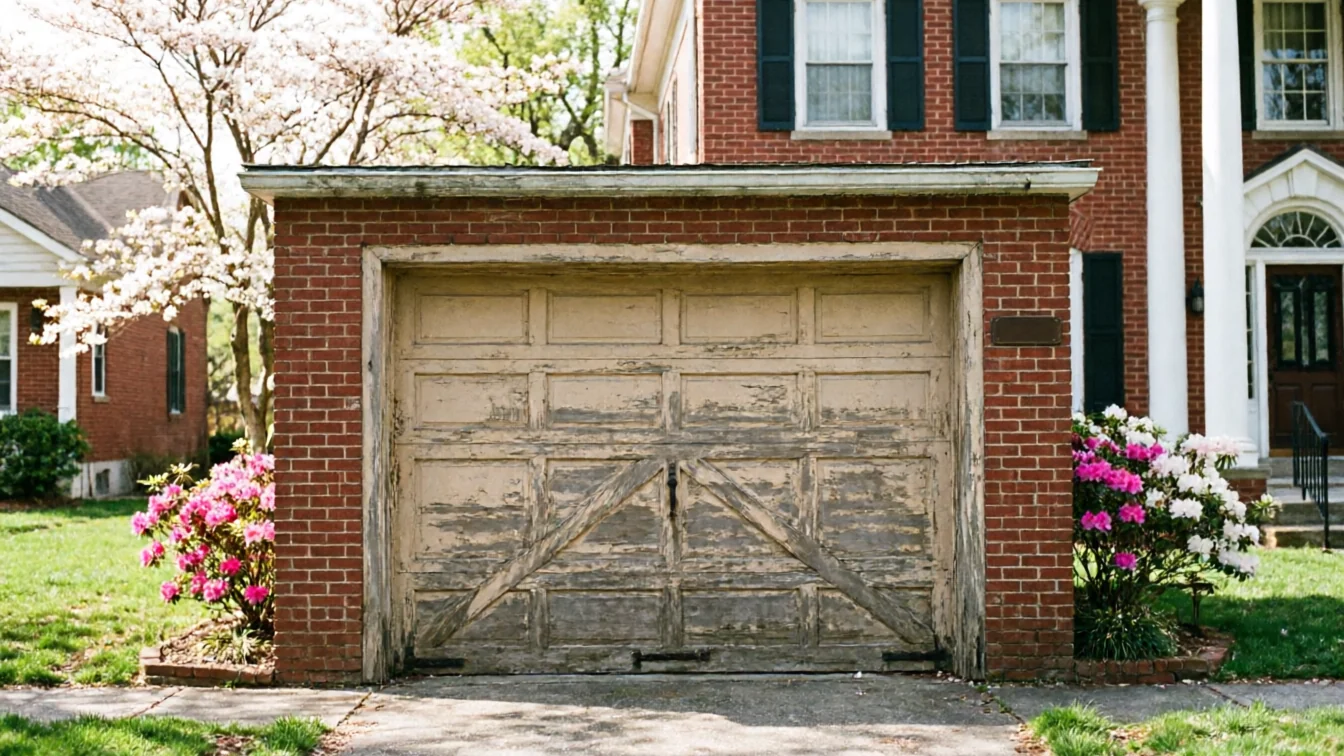
Houses in the Simpsonville area span construction years from 1938 to 2013, with the median built around 1979, which means a lot of garage doors here are original to houses built before steel rollup doors became standard. Across the 23 named communities that make up this area, most garage doors you'll find date to the 1960s and 1970s builds - wood panel doors on extension springs, or early steel single-layer doors with no insulation, hung on tracks that were never meant to carry a modern opener's weight or speed.
What we actually see on a call: panels that have delaminated at the bottom where moisture wicks up from the slab, hinges stretched oval from decades of cycling, and spring sizing that was correct for the original lightweight door but wrong once someone swapped in a heavier insulated replacement panel without re-rating the spring. None of this means the door is junk. A lot of these doors have good bones - solid track alignment, a frame that's still square - and the failure is in one part, not the whole unit.
The honest answer depends on what's actually broken versus what's just old. A door that still rolls true and seats flush at the bottom is a different conversation than one that's racked in the opening.
When Waiting Is Fine
Not every symptom on an older door needs a same-week call. A little noise on a door from the 1960s or 70s build era - a squeak at the rollers, a shudder as it passes the midpoint - is often just dry hardware, not a failure in progress. If the door still opens and closes smoothly and the springs aren't visibly stretched or gapped, lubricating the rollers and hinges and watching it for a few weeks is a reasonable call, not a risk.
Cosmetic wear is the clearest case for waiting. Faded paint, minor dents on a steel panel, or a wood door that's lost its finish but isn't soft to the touch when you press it - none of that affects function. Simpsonville's cold-moderate climate band doesn't put the kind of extreme heat-cycling stress on panels that you'd see further south, so slow cosmetic decline is genuinely slow here, not a sign something's about to give.
Where waiting stops being fine: any visible gap or fraying in a torsion spring coil, a cable that's come off its drum, or a door that's started to hang crooked in the opening. Those don't get better with time, and a spring under tension that lets go is a safety issue, not a convenience one.
What You Pay
We don't have a flat number to quote here, because what a repair costs depends entirely on what's actually failed and whether parts for that era of door are still common stock or something we have to source. What we can say is how to think about the repair-versus-replace line.
With median household income here at $55,378, a full replacement is a bigger stretch of the budget than it would be in a higher-income area, which is part of why repair is worth considering first on a door that's structurally sound. If the track is straight, the frame is square, and the failure is isolated - one spring, a cable, a bent hinge - fixing that one thing is almost always the cheaper and faster path, and it's often all the door needs for years more service.
Where the math flips is when you're stacking repairs: a spring this year, a panel next year, an opener gear set after that. At that point you're paying piecemeal for a door that was never going to be efficient or quiet to begin with. We'll tell you straight when a door's hit that point instead of billing you through it one part at a time.
What Local Conditions Do
Simpsonville sits in a cold-moderate climate band, which means winter temperature swings cycle your torsion spring more than a mild climate would, but nothing like the freeze-thaw extremes further north. That matters for an older spring that's already near the end of its cycle life - cold steel is stiffer and more likely to snap under load than warm steel, so a spring that's been creaking along fine through summer can fail on the first hard cold snap.
For the wood-panel doors still common in the area's 1960s and 70s housing stock, the bigger issue is moisture, not temperature. Panels that sit close to grade pull dampness up from the slab over decades, and that shows up as soft spots or delamination at the bottom rail long before the rest of the door looks tired. It's worth checking that spot specifically on any door built in that era, even if nothing else seems wrong.
If you're out toward Fountain Inn or Five Forks, the same 1960s-70s housing pattern holds, just a few miles further from the shop, so the same checks apply whether you're inside Simpsonville proper or just outside it.
Frequently asked questions
My garage door is original to a house built in the 1960s. Is it worth fixing or should I just replace it?
Depends what's wrong. If the track's straight and the frame's square, a single failed part - spring, cable, hinge - is usually worth fixing on an older door with good bones. If you're stacking repairs year after year, replacement starts to make more financial sense than paying piecemeal.
Why did my spring snap in cold weather when it's been fine all summer?
Cold steel is stiffer and more brittle under load than warm steel. A spring that's already near the end of its cycle life is more likely to let go during a cold snap, even if it seemed fine right through the warmer months.
How do I know if my wood garage door panel is rotting?
Press on the bottom rail, where it sits closest to the slab. That's where moisture wicks up over the years. If it gives or feels soft under pressure, that panel's compromised even if the rest of the door looks fine from a few feet back.
Related garage door services in Simpsonville
More garage door guides
Book garage door service in Simpsonville
Call now or request a quote - tell us what the door is doing and where you are.