
Simpsonville, SC · Garage Door Service
When a Spring Goes in Cold Weather Here
Why Simpsonville's cold mornings snap garage door springs, what can wait and what can't, and what older torsion hardware on 1960s-70s houses means for the repair.
- Repairs & new doors
- Springs & openers
- Serving 4 nearby communities
What Is Going On
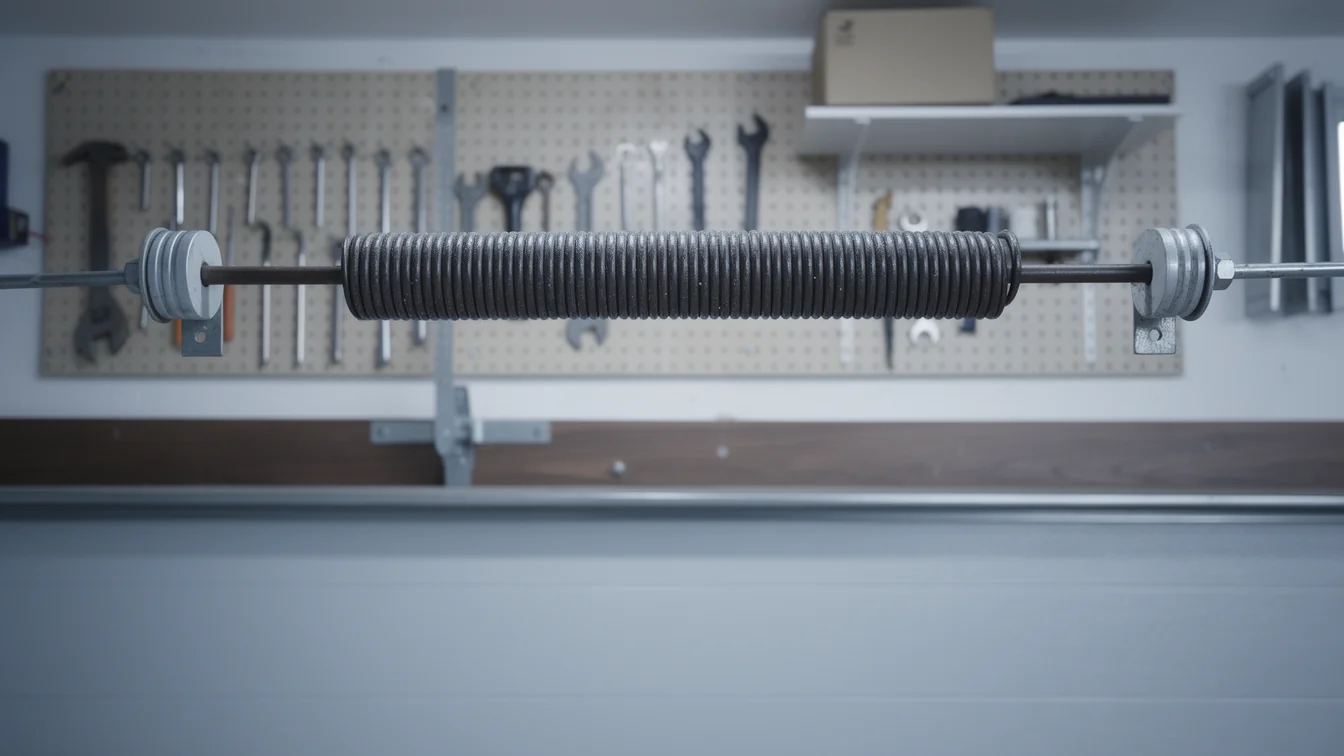
Steel contracts when it gets cold, and a torsion spring that's already fatigued from years of cycling loses the last bit of give it had. Simpsonville sits in a moderate cold climate band, not a deep-freeze one, but the swings we do get are enough to turn a spring that was fine in October into one that snaps on a 30-degree January morning. That's physics, not bad luck.
What makes this town particular is the housing. A lot of the stock here went up in the 1960s and 70s, with homes across the area ranging from 1938 to as recent as 2013. On the older end of that range you're looking at torsion hardware that's been through forty-plus winters of expansion and contraction. The spring doesn't fail because of one cold night. It fails because one cold night was the night it ran out of fatigue life, and the cold made the metal less forgiving right when it mattered.
If your door suddenly won't lift, or lifts and slams back down, a broken spring is the likely cause, not the opener. The opener is just doing what it's told with no spring tension helping it.
When Waiting Is Fine
Not every cold-weather symptom means a broken spring is coming tonight. If the door feels heavier than usual, moves a little slower, or the opener strains for a second before catching, that's often just stiff grease in the rollers and track reacting to the temperature drop. That can wait for a weekday appointment. It is not an emergency.
What shouldn't wait: a visible gap in the coil, a door that won't budge at all, or a loud bang from the garage followed by the door refusing to move. That's a spring that's already gone, and running the opener against it can bend track or strip the drive gear.
Here's the honest limitation: if your spring is original to a house built in the 1960s or 70s, I'm not going to tell you it just needs adjustment. Springs that old on their original cycle count are near the end regardless of the weather, and patching one through another winter usually just moves the failure to a worse moment, like when you're loading the car before work.
What You Pay
I don't have a flat number to quote you here without seeing the door, and I'd rather say that than make one up. Torsion spring jobs vary by the size and weight of the door, whether it's a single or double, and whether the drums, cables, or bearing plate also need attention after the failure. Cold-weather breaks are more likely to take a cable or end bearing with them than a summer break is, because everything's already under more stress when it goes.
What I can tell you is what drives the cost up or down: one spring versus a matched pair, standard steel track versus anything custom, and whether the opener's force settings need resetting afterward so it isn't straining against a fresh spring the way it was against the dead one. Ask for those line items when you get a quote, from anyone, so you know what you're actually paying for.
What Local Conditions Do
Across the area, most of the roughly 31,000 owner-occupied houses sit in that same 1960s-70s band, which means a lot of garages built to the code and hardware standards of that era, not today's. That matters for springs specifically because older torsion setups often used lighter-gauge wire than a modern door of the same size would call for, so they were already closer to their limit before cold weather ever entered the picture.
Simpsonville's winters aren't brutal, but the moderate cold swings we get are exactly the kind that stress metal that's been sitting at the edge of its service life for a decade already. A spring rated for a certain cycle count doesn't care what season it finally gives out in, but cold raises the odds that it happens suddenly rather than gradually.
If you're in one of the surrounding areas - Fountain Inn, Five Forks, Gantt, and the rest out through Golden Grove and beyond - the same housing-era pattern holds, since the stock across the wider service area tracks the same decades.
Frequently asked questions
Why did my spring break on such a cold morning?
Cold metal has less give, and a spring that's already fatigued from years of use loses its last margin right when the temperature drops. It's usually not one cold night causing the problem, it's one cold night exposing a spring that was already near the end of its life.
Is it safe to open the door manually after a spring breaks?
You can lift it by hand carefully, but without spring tension the door is full weight, which is heavy and awkward to control. Don't force the opener to do it, and don't prop the door open with anything that could slip.
My house was built in the 1960s, does that matter for the spring?
It can. Older torsion hardware was often sized to standards from that era, which means less margin than a modern equivalent. If the spring is original, age and cycle count matter more than the weather that happened to be the final straw.
Can I just replace one spring if I have two?
You can, but mismatched springs wear unevenly and the newer one often outlives the older one by a lot less than you'd expect. Ask whoever quotes the job to explain why they're recommending one versus a pair for your specific door.
Related garage door services in Simpsonville
More garage door guides
Book garage door service in Simpsonville
Call now or request a quote - tell us what the door is doing and where you are.