
Simpsonville, SC · Garage Door Service
Cable Repair for Fountain Inn's 1990s-Era Garage Doors
Fountain Inn's garage doors date to the late 1990s. We fix frayed, snapped, and off-track lift cables on these builder-grade doors, 4 miles from Simpsonville.
- Repairs & new doors
- Springs & openers
- Serving 4 nearby communities
How Long You Are Without the Door
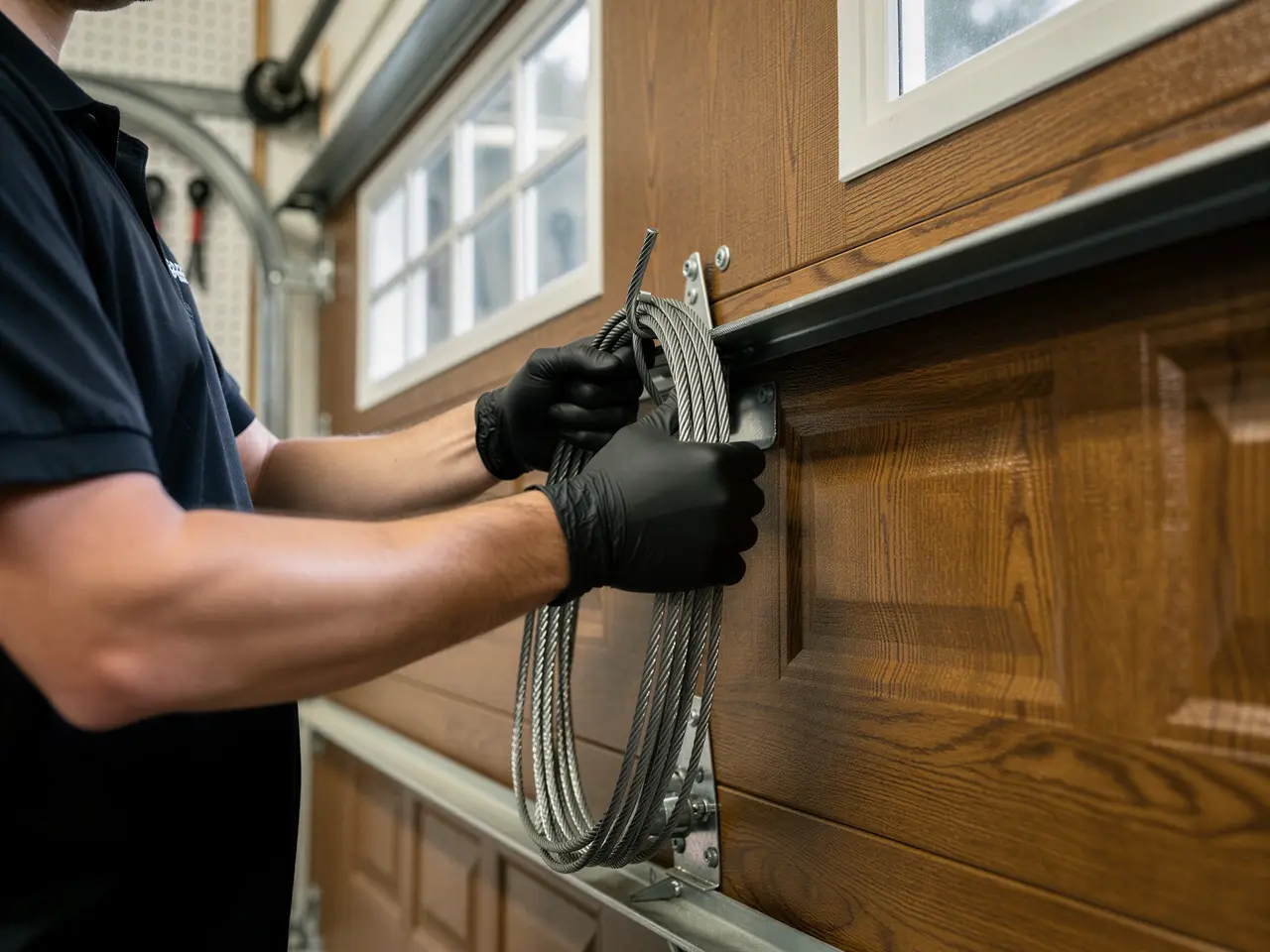
The wait isn't about how far we have to drive - Fountain Inn sits about 4 miles out from our Simpsonville shop, so travel isn't the bottleneck. It's about what the cable took with it when it broke. On a door built around 1997, which is the median age of construction out here, a snapped lift cable usually comes down clean on one side and leaves the door hanging crooked on the track rather than crashing. That means the opener is usually fine, the track is usually fine, and the fix is a cable swap and a re-balance rather than a full teardown.
Where it gets longer is when the cable frayed instead of snapped outright. Fraying means it was rubbing on something - a bent drum flange, a roller that's walked off its track - for weeks before it gave. We won't quote a fix time without seeing that, because "replace the cable" and "replace the cable and straighten the drum" are two different jobs. We don't keep a local stock point in Fountain Inn itself; everything rides out on the truck from Simpsonville, so the parts most builder-grade doors of this era use - standard-gauge galvanized lift cable, matched drums - are the ones we carry as a matter of course.
What the Repair Takes
Before anything comes off the door, we take the tension out of the system safely - the spring, not the cable, is what's doing the holding, and a cable job done with the spring still loaded is how people get hurt. Once that's clamped down, we pull the broken or frayed cable off the drum, check the drum itself for a bent flange or a stripped set screw, and look at the matching cable on the other side. If one side frayed from rubbing, the other side is usually close behind, so we replace the pair rather than the one that already failed.
On Fountain Inn's 1990s and 2000s builder-grade doors, the cable gauge and drum size are fairly standard - this isn't custom or oversized hardware, which keeps the job straightforward once we're inside it. We re-wind the new cable onto the drum, reset tension, and run the door through a full cycle watching for drift, binding, or one side lagging the other. Last step is a balance check: lift the door by hand partway and see if it holds. If it doesn't, the spring tension needs adjusting too, and we handle that in the same visit rather than sending a second truck out.
Why This Fails Locally
Fountain Inn's housing stock centers on 1997 construction - newer than the wider Simpsonville service area, where the median build year runs back to 1979 and the bulk of the stock dates to the 1960s and '70s. That gap matters for cables specifically. Older doors in the service area's pre-1980 stock were more often fitted with aftermarket or heavier replacement cable over the years; Fountain Inn's doors are still mostly running the original factory-wound galvanized cable that shipped with a builder-grade door in the late '90s building boom.
Fountain Inn also runs a higher median household income, $72,021 against the wider area's $55,378, which tracks with what we see on the trucks: more insulated steel and composite doors, heavier panels, and correspondingly higher spring and cable tension than a bare single-layer door. Heavier doors put more load on the same cable gauge, and that shows up as wear at the drum years before it would on a lighter door. Add the region's cold-moderate winters, and galvanized cable that's already under higher tension gets a little less forgiving when it contracts in a cold snap - it's one more reason fraying shows up at the drum first.
What Can Go Wrong
The most common failure we see on these doors isn't a cable that simply snaps - it's one that jumps the groove on the drum. A door that's slightly out of track alignment, which is common once rollers wear on a 20-plus-year-old builder-grade door, lets the cable walk sideways under tension until it's riding the edge of the drum instead of the groove. That's the fraying you catch early if you're looking, and the cable failure you don't catch if you're not.
A second pattern is a cable that's fine but the drum set screw has backed out, so the drum spins loose on the shaft under load instead of winding evenly. That looks like a cable problem - the door drops unevenly - but swapping the cable alone won't fix it; the drum has to be reset and the screw torqued down. Worth flagging too: on these heavier insulated doors, a cable failure on one side often means the other side's cable is close to the same age and the same wear pattern, so we check it rather than assume it's good.
The Symptom
If one side of the door hangs noticeably lower than the other, or the door sits crooked in the opening when it's down, that's a cable that's gone slack or come off the drum on one side - not an opener problem. You may also see the cable itself visibly loose or looped at the bottom bracket instead of taut.
A door that jerks or hesitates partway up, especially near the top, points to a cable that's fraying but hasn't let go yet - it's catching on a burr at the drum or a bent flange. That's the one worth calling about before it snaps rather than after, since a cable that fails mid-cycle can let the door drop unevenly and put strain on the track and rollers on its way down. If the door won't move at all and the opener motor is straining or humming without lifting it, don't keep hitting the button - that's the drum or cable jammed, and running the motor against it risks burning out the opener on top of the cable repair you already needed.
The DIY Question
Don't do this one yourself. A garage door lift cable works against the torsion spring, and the spring is storing enough force to cause a serious injury if it releases while you're working near it. There's no safe way to unwind a cable off a loaded drum without the right bar and clamps, and guessing at it is how people lose fingers or get hit by a swinging door.
What you can safely do is look: check whether the cable at the bottom bracket is taut and running straight to the drum, or slack and loose. If it's visibly frayed - thin wire strands sticking out like a broken guitar string - stop using the door and call rather than cycling it again, since that's the stage right before it snaps outright. One honest limit on our end: if the drum or the track itself is bent badly enough from an impact, a cable swap alone won't hold the fix, and we'll tell you straight when the right call is replacing the hardware instead of patching around it.
Frequently asked questions
Why did my garage door cable snap when the door is only from the late '90s?
Age isn't the only factor - on Fountain Inn's builder-grade doors from that era, the original factory cable is still common, and heavier insulated panels put more load on it than it was sized for originally. Years of that tension, plus a bit of drum or roller wear, is usually what finally lets a cable go.
Do you keep garage door cable parts stocked for Fountain Inn?
We don't run a separate stock point in Fountain Inn - everything comes out of Simpsonville, about 4 miles away. The lift cable and drum sizes common on this area's 1990s-era builder-grade doors are parts we carry as a matter of course, so that's not usually a delay.
Is it ever cheaper to replace the whole door instead of the cable?
If the cable failure took a drum, a bent track, or a damaged panel with it, patching just the cable may not hold. We'll look at the whole door before quoting and tell you straight if a full replacement makes more sense than a repair that won't last.
More garage door services in Fountain Inn
Book garage door service in Simpsonville
Call now or request a quote - tell us what the door is doing and where you are.