
Simpsonville, SC · Garage Door Service
Spring Repair for Fountain Inn's Newer Garage Doors
Torsion spring repair for Fountain Inn homes built mostly around 1997. Covered from Simpsonville, four miles out. Same hardware era, different fault pattern.
- Repairs & new doors
- Springs & openers
- Serving 4 nearby communities
How Long You Are Without the Door
Fountain Inn sits four miles from Simpsonville, which is the shortest run we make on any call in the territory. That matters more than it sounds like it should. A spring job isn't long once the truck is parked - it's the getting-there that eats the clock on far-flung addresses. At four miles, there's no meaningful difference between a morning call and an afternoon one; the drive isn't the bottleneck here the way it is on jobs out toward Gray Court or Woodruff. What still decides the timeline is whether we're carrying the right spring size on the truck, which comes down to the door, not the distance. We don't operate a branch in Fountain Inn - every job rolls out of Simpsonville - but a four-mile trip barely counts as a drive, so scheduling here runs close to same-day in most weeks.
What the Repair Takes
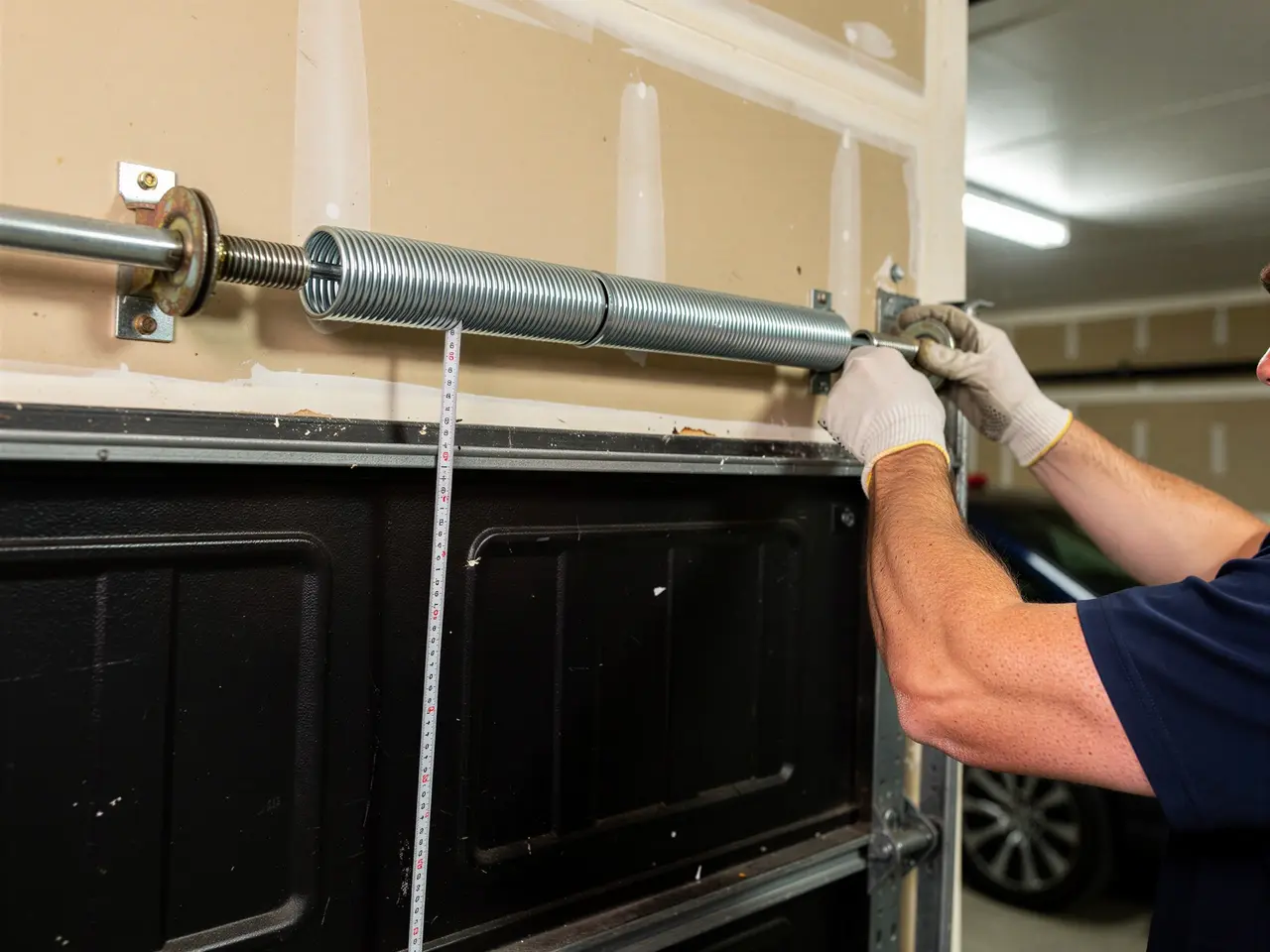
A spring swap is a spring swap mechanically - unwind the old torsion springs, measure wire size and wind count against the door weight, set the new springs, cycle the door, check balance. What changes job to job is what we find on the shaft. Fountain Inn's housing stock centers around 1997, a good two decades newer than the 1979 median for the wider service area, and that gap shows up on the bar. Nearly every door we open here is a factory double-car torsion setup on a steel shaft with ball-bearing end plates, not the single extension-spring rig you still find on the oldest houses closer to town. That means parts are common sizes, not special orders, and the labor is predictable: unwind, replace, balance, done in one visit in the overwhelming majority of cases.
Why This Fails Locally
The region sits in a cold-moderate climate band, and steel springs lose and regain tension as temperatures swing through the year regardless of how new the door is. What's different in Fountain Inn is the starting point. Because most garages here were built around 1997 rather than decades earlier, the springs we're pulling off aren't original 1970s stock worn down by forty-plus years - they're later replacements or, in some cases, still the builder-installed pair reaching the end of a normal cycle count. A torsion spring is rated for a number of open-close cycles, not a number of years, and a household that uses the garage door as a main entrance burns through that count faster than one that doesn't. In a town with 4,306 households and a median income of $72,021, we see more two-car, daily-use garages than single-bay setups, and daily use is what actually retires a spring - not the age of the house around it.
What Can Go Wrong
A broken torsion spring usually announces itself cleanly: the door won't lift, or it lifts a few inches and stalls because the opener is trying to do a spring's job alone. That's the straightforward failure. The one that costs more is what happens after - a cable that's been running on an unbalanced drum can jump its groove, and a door forced upward on one side while the other side is dead can walk off the tracks and bend a roller bracket or a panel seam. On the newer double-door torsion setups common in Fountain Inn, a single broken spring on a two-spring shaft still leaves one side under tension, which is exactly the setup that strips a cable if someone keeps hitting the opener button trying to force it. The fix is still just the spring in most cases, but waiting past the first stall raises the odds of a second repair.
The Symptom
Most calls start the same way: the door made a bang, usually loud enough to hear from inside the house, and now it either won't move or the opener strains and stops partway. Sometimes there's no bang at all - just a door that feels heavier than it used to, closes crooked, or drifts back down after the opener lifts it. Any of those points to spring tension, not the opener itself, even though the opener often gets blamed first since it's the part making noise. If the door was fine yesterday and dead today, that's a spring. If it's been getting slower and heavier over weeks, that's a spring wearing out rather than one that's already broken, and it's worth a call before it snaps mid-cycle.
The DIY Question
We'll say this plainly: don't open the torsion assembly yourself. A wound spring under tension can cause a serious injury, and the winding bars and clamps that make it safe aren't things most homeowners keep around or have used before. Where a homeowner can actually help is diagnosis - note whether the door stalled on the way up or the way down, whether you heard a bang, and whether it's one door or two on a double garage, since that narrows what we load on the truck before we leave Simpsonville. The honest limitation: if the spring size isn't a stock one, we may need a day to get it in, and we won't guess at wire gauge just to finish faster, because an undersized spring fails again within months.
Frequently asked questions
Why does my Fountain Inn garage door need a different spring than my neighbor's in old Simpsonville?
Housing stock age drives spring type. Fountain Inn's homes run mostly around 1997, so doors are factory torsion setups with standard shaft and wire sizes. Older Simpsonville houses from the 1960s-70s era sometimes still run extension springs or non-standard torsion hardware, which changes what we carry on the truck for that job.
How fast can someone get to Fountain Inn from Simpsonville?
It's a four-mile drive, the shortest in our service area, so travel time isn't usually what sets the schedule. What matters more is whether we're carrying the right spring size for your door, which we can usually confirm over the phone before heading out.
Is a broken spring ever not worth repairing?
On a newer torsion setup like most doors here, repair almost always makes sense - the springs are standard sizes and the shaft hardware is in good shape. Replacement over repair tends to come up only when the drums, bearings, or shaft itself are damaged alongside the spring, which is less common on 1990s-and-later doors.
Can I just replace one spring if my double door has two?
You can, but we don't recommend it. If one spring broke from normal cycle wear, the other is close behind it on the same clock. Replacing both at once means one visit instead of two and keeps the door balanced evenly on both sides.
More garage door services in Fountain Inn
Book garage door service in Simpsonville
Call now or request a quote - tell us what the door is doing and where you are.